
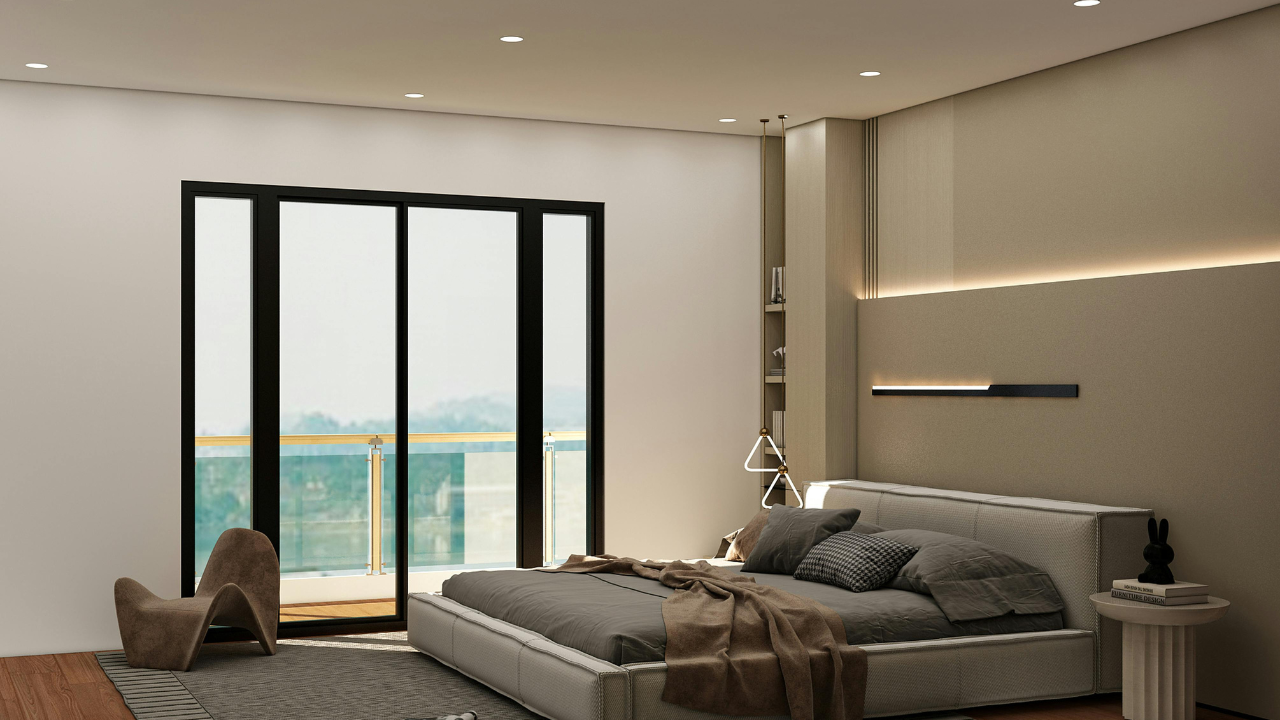
You love clean lines and empty surfaces. Your partner collects vintage records, patterned textiles, and—let’s be honest—everything. You crave breathing room.
They crave visual excitement. And somewhere between your all-white fantasy and their cabinet of curiosities, you’re both sleeping on the couch.
The minimalist-maximalist clash isn’t just about aesthetics. It’s about how you process your environment, how you relax, and what “home” means to you.
One person finds peace in emptiness; the other finds joy in abundance. Neither is wrong, but sharing 800 square feet without a strategy? That’s a recipe for passive-aggressive furniture rearrangement.
Here’s the truth: You don’t need couples therapy. You need a floor plan that works for both of you.
Why This Design Conflict Runs Deeper Than You Think
The tension between minimalism and maximalism isn’t superficial—it’s neurological. Minimalists often experience visual clutter as cognitive overload, triggering actual stress responses.
Their brains literally work harder to filter out excess stimuli. Meanwhile, maximalists feel emotionally flat in sparse environments. They need visual complexity to feel engaged and at home.
Standard home layouts don’t account for this divide. Most apartments and houses assume everyone in the household has the same design philosophy. They don’t offer natural zones for different aesthetic approaches, which means every shared space becomes a battleground.
The solution isn’t compromise that leaves both of you miserable. It’s creating distinct zones with clear boundaries, then building thoughtful transition spaces that honor both styles.
Strategy #1: The Zoning Method—Assign Aesthetic Territories
The first rule of design diplomacy: Stop trying to blend your styles in every single room. Instead, divide your home into clearly defined aesthetic zones.
How to Map Your Zones
Start by listing every room and surface. Then categorize them:
- Minimalist Zones: Spaces where clean lines and negative space dominate
- Maximalist Zones: Areas where collections, patterns, and visual richness thrive
- Neutral Zones: Shared spaces that use the bridge techniques we’ll cover later
Here’s a sample allocation for a two-bedroom apartment:
| Room/Space | Style Assignment | Why It Works |
|---|---|---|
| Primary Bedroom | Minimalist | The clutter-sensitive partner needs restful sleep without visual noise |
| Guest Room/Office | Maximalist | Gives the collector a dedicated display space; guests see personality |
| Living Room | Neutral Bridge | Most shared time happens here—needs both perspectives |
| Kitchen | Minimalist Base | Functional spaces work better clean; maximalist can add collectibles |
| Bathroom | Minimalist | Small spaces feel larger and more spa-like when simplified |
| Dining Area | Maximalist Accent | Meals are social and celebratory—perfect for visual richness |
The Key Rule: Respect the Boundaries
Once you’ve assigned zones, treat them like embassy territory. The minimalist doesn’t reorganize the maximalist’s curated bookshelf.
The maximalist doesn’t “declutter” the minimalist’s bedroom dresser. This isn’t about winning space—it’s about creating sanctuary.
One couple I consulted with painted a literal line down their hallway (in a chic charcoal gray) to mark where minimalist white walls transitioned to the maximalist’s gallery wall. Was it dramatic? Yes. Did their arguments stop? Also yes.
Strategy #2: The Bridge Room Technique
Your neutral zones need special handling. These are high-traffic areas where both of you spend time—living rooms, kitchens, entryways. The goal here isn’t to “compromise” into beige mediocrity. It’s to create a sophisticated hybrid that reads as intentional, not confused.
The 70-20-10 Allocation Rule
Professional designers use this color proportion rule, but it works perfectly for style mixing:
- 70% Minimalist Foundation: Clean walls, simple furniture silhouettes, uncluttered surfaces
- 20% Maximalist Moments: Curated collections, bold textiles, statement lighting
- 10% Wild Card: Rotating seasonal elements or experimental pieces
This formula prevents the space from feeling chaotic while giving the maximalist meaningful creative space.
Practical Applications for Bridge Rooms
Living Room Example:
- Start with a clean-lined sofa in neutral linen (minimalist base)
- Layer in two patterned throw pillows and a vintage rug (maximalist layer)
- Add one large-scale art piece or gallery wall in a defined frame (controlled maximalism)
- Keep coffee table and side tables clear except for one sculptural object (minimalist restraint)
Kitchen Example:
- Install handleless cabinets with hidden storage (minimalist structure)
- Display a collection of colorful ceramics on open shelving in one designated area (maximalist moment)
- Use all matching canisters and containers in the pantry (minimalist organization)
- Hang a bold pendant light over the island (maximalist accent)
The magic happens when you contain the maximalism within defined boundaries. Open shelving works, but only on one wall. Gallery walls work, but frame them with generous negative space around them.
Strategy #3: The Containment Strategy—Give Collections Structure
Maximalists aren’t hoarders—they’re curators without exhibition space. The problem isn’t the amount of stuff; it’s the lack of intentional display systems. When you give collections proper structure, they stop reading as clutter and start reading as design features.
The Display Formula
Every maximalist collection needs three things to look intentional rather than chaotic:
- Defined Boundaries: Shelving units, shadow boxes, or designated walls
- Repetition or Color Cohesion: Collections look curated when items share visual DNA
- Negative Space Buffer: Each display area needs breathing room around it
Product Types That Make This Work
| Display Solution | Best For | Minimalist Appeal | Maximalist Appeal |
|---|---|---|---|
| Floor-to-Ceiling Built-Ins | Books, vinyl, ceramics | Clean lines, hidden storage option | Maximum display capacity |
| Floating Box Shelves | Small collectibles, plants | Appears architectural, not “stuff-y” | Creates gallery effect |
| Glass Display Cabinets | Vintage treasures, art pieces | Contains visual noise behind glass | Protects and elevates collection |
| Picture Ledges | Rotating art, photos, prints | Easy to keep minimal and edited | Allows frequent curation changes |
| Ottoman Storage Benches | Textiles, magazines, craft supplies | Keeps clutter hidden | Accessible stash without visibility |
The Game-Changer Product: Look for modular shelving systems like Elfa or IKEA’s IVAR that can be reconfigured. Start with the minimalist partner’s comfort level, then add units as the maximalist’s collection grows.
Strategy #4: The Contrast Harmony Approach
Sometimes the best way to merge two opposite styles is to intensify the contrast rather than blur it. This creates visual drama that feels deliberate, not accidental.
How to Make Extreme Contrast Work
Think of your home like a museum that moves between quiet galleries and immersive installations. The transitions matter as much as the spaces themselves.
Technique 1: The Clean Slate + Statement Moment
- Keep 80% of a room absolutely minimal
- Introduce one wildly maximalist element as a focal point
- Example: All-white bedroom with an elaborate Moroccan-tile accent wall behind the bed
Technique 2: The Frame Method
- Use minimalist architecture (clean walls, simple molding) as the frame
- Fill specific zones with maximalist content (bold wallpaper in a powder room, patterned tile in a kitchen backsplash)
- The minimal surround makes the rich areas feel intentional
Technique 3: Texture Layering with Monochrome
- Satisfy the minimalist with a restricted color palette (all whites, or tonal grays)
- Satisfy the maximalist by layering wildly different textures within that palette
- Example: White linen sofa + white shag rug + white ceramic collection + white macramé wall hanging = visual interest without color chaos
The Transition Zone Trick
The hallway or entry that connects your minimalist and maximalist zones needs special treatment. Use these spaces to gradually shift between styles so the contrast doesn’t feel jarring.
Create a gradient effect:
- Start with pure minimalism at the entrance to a minimal zone
- Gradually introduce one maximalist element (a patterned runner)
- Add another layer (a console table with a curated vignette)
- Arrive at full maximalism at the threshold
This prevents the “walking between two different houses” feeling that happens when styles clash abruptly.
Strategy #5: The Furniture Negotiation—Where Function Meets Style
Some furniture pieces are so foundational that they affect everyone’s daily experience. These require careful selection based on shared needs, not aesthetic preference alone.
The Non-Negotiable Furniture Guide
The Sofa Decision:
Both of you need to love this piece. Here’s how to bridge the gap:
- Minimalist Priority: Clean silhouette, legs (not skirted), neutral color
- Maximalist Addition: Layer with throw pillows in bold patterns and textures
- Winning Combo: A Scandinavian-style sofa with simple lines in a rich velvet fabric (textural interest without visual complexity)
The Storage Solution:
This is where relationships go to die if you don’t get it right.
- For the Minimalist: Closed storage that hides everything (credenzas, cabinets with doors, storage ottomans)
- For the Maximalist: Open shelving for display, but in a structured grid format
- The Compromise Piece: A shelving unit that’s 60% closed cabinets, 40% open display
Look for pieces like the IKEA BESTÅ system or CB2’s Chill media console—they offer customizable combinations of closed and open storage.
The Bedroom Furniture:
Since you’ve likely assigned the bedroom to one style or the other, the furniture should reflect the primary user’s needs. But choose pieces that won’t cause resentment:
- If it’s a minimalist bedroom, select a platform bed with built-in storage to contain the maximalist’s extras
- Add a large dresser or wardrobe so the maximalist’s belongings aren’t spilling into minimalist territory
- Consider a storage bench at the foot of the bed for the maximalist’s throw blankets and pillows
The Budget Breakdown: Where to Splurge and Save
When you’re merging two styles, you need strategic investment. Here’s where your money matters most:
| Category | Splurge or Save? | Reasoning |
|---|---|---|
| Sofa | Splurge | You both use it daily; quality affects comfort and longevity |
| Storage Systems | Splurge | Good storage solves 70% of minimalist/maximalist conflict |
| Paint | Save | Easy to change if you hate it; affects mood but not function |
| Lighting | Splurge | Affects both ambiance and functionality; hard to change |
| Decorative Objects | Save | Maximalist can thrift/curate; minimalist wants fewer anyway |
| Rugs | Splurge | Defines zones, adds texture, takes daily wear |
| Window Treatments | Splurge | Custom treatments look intentional; bad ones ruin a room |
| Accent Pillows | Save | Easily swapped, seasonal, low-commitment color |
Strategy #6: The Color Strategy—Finding Common Ground on Palettes
Color causes more arguments than almost any other design element. The minimalist wants serene neutrals. The maximalist wants jewel tones and patterns. You can have both if you use a tiered color system.
The Three-Tier Color Approach
Tier 1 – The Foundation (Minimalist Territory):
- Walls, ceiling, large furniture pieces
- Stick to whites, grays, beiges, or soft earth tones
- This creates the calm base the minimalist craves
Tier 2 – The Accent Layer (Shared Territory):
- Rugs, curtains, medium-sized furniture
- Introduce one or two bolder colors, but in solid form
- Examples: A rust-colored velvet chair, sage green curtains
Tier 3 – The Pop Layer (Maximalist Territory):
- Pillows, throws, artwork, decorative objects
- Go wild with pattern, multiple colors, visual complexity
- This layer can rotate seasonally without major commitment
Color Rules That Keep the Peace
- The One Pattern Rule for Shared Spaces: If you have a patterned rug, keep pillows solid. If you have patterned curtains, keep the sofa neutral. Never compete in the same sightline.
- The Color Family Cohesion: Even when using multiple colors, keep them within related families (all warm tones or all cool tones) to prevent chaos.
- The 3-Color Maximum: In any single vignette or furniture grouping, limit yourself to three colors. This applies even to maximalist displays.
- The Metallic Bridge: Metallics (brass, copper, chrome) read as neutral and can tie together disparate styles. A brass lamp works in both minimalist and maximalist contexts.
Strategy #7: The Rotation System—Keep It Fresh Without Clutter
The maximalist gets bored with static arrangements. The minimalist gets overwhelmed by constant change. The solution? A structured rotation system.
How to Implement Seasonal Rotations
Step 1: Create Storage for Off-Season Items
Invest in storage solutions specifically for items not currently on display:
- Clear plastic bins labeled by season or category
- Under-bed storage for textiles and pillows
- A designated closet or cabinet for “in rotation” décor
Step 2: Set Rotation Dates
Agree on specific times when changes happen:
- Seasonal rotations (4 times per year)
- Holiday-specific swaps (minimalist has veto power on duration)
- Monthly “one thing in, one thing out” for smaller updates
Step 3: Establish Display Limits
The maximalist can rotate items, but the number of displayed items stays constant:
- If the bookshelf holds 15 objects, swapping one out for something else is fine
- Adding a 16th object requires approval or removing something else first
This system gives the maximalist creative freedom while maintaining the visual order the minimalist needs.
Strategy #8: The Lighting Layer—Create Ambiance That Serves Both Styles
Lighting is the unsung hero of style merging. Good lighting can make a minimalist space feel warm and a maximalist space feel curated.
The Three-Layer Lighting Plan
Every room needs three types of lighting to satisfy both aesthetic approaches:
Layer 1 – Ambient (Minimalist Priority):
- Recessed ceiling lights or flush-mount fixtures
- Provides overall illumination without visual clutter
- Keep these simple, white, and functional
Layer 2 – Task (Shared Priority):
- Reading lamps, under-cabinet kitchen lighting, desk lamps
- Choose task lighting with clean lines but interesting materials (wood, brass, ceramic)
- These can introduce subtle personality without overwhelming
Layer 3 – Accent (Maximalist Priority):
- Statement chandeliers, colorful table lamps, string lights, art lighting
- This is where bold choices happen: a Moroccan pendant, an oversized arc lamp, a vintage chandelier
- Use dimmers so the minimalist can tone it down when needed
Lighting Rules for Harmony
- Install dimmer switches everywhere. This single upgrade lets you adjust intensity to match mood and preference.
- Layer warm and cool tones. Minimalists often prefer cooler, crisper light (4000K-5000K). Maximalists tend toward warmer tones (2700K-3000K). Use both in different layers.
- Illuminate the collections. If the maximalist has a treasured display, add dedicated picture lights or LED strips. Proper lighting transforms “clutter” into “gallery.”
Strategy #9: The Textile Compromise—Soft Goods That Bridge the Gap
Textiles are the easiest category to layer and adjust. They’re also the fastest way to inject maximalist personality into minimalist spaces without permanent commitment.
The Textile Hierarchy
Base Layer (Minimalist):
- Solid color curtains in natural fabrics (linen, cotton)
- Neutral upholstery on major furniture
- Simple area rugs in solid colors or subtle textures
Middle Layer (Transition):
- Throws in textured weaves (cable knit, waffle, bouclé)
- Curtain panels with subtle patterns (tone-on-tone, small geometric)
- Rugs with low-contrast patterns (overdyed vintage, faded kilim)
Top Layer (Maximalist):
- Decorative pillows in bold patterns and colors
- Statement throw blankets in rich textures
- Accent rugs or layered rugs
The Pillow Formula
Since pillows cause surprising amounts of tension, here’s a formula that works:
For a Standard Sofa:
- 2 large (22″x22″) solid pillows in a neutral that matches the sofa (minimalist base)
- 2 medium (20″x20″) pillows in a transitional pattern (subtle stripe, tone-on-tone print)
- 1 small (16″x16″) pillow in a bold pattern or color (maximalist accent)
The minimalist gets visual calm from the majority of pillows. The maximalist gets personality from the accent piece. Both can see their style represented.
Strategy #10: The Art Wall Negotiation
Art is deeply personal, and disagreements here can feel like rejections of taste and identity. The solution requires both structure and flexibility.
The Gallery Wall Blueprint
Option 1: The Salon Wall (Maximalist Approach)
- Cover most of one wall with varied frames, sizes, and art types
- But use a unified frame color (all black, all gold, all wood) to create cohesion
- The minimalist gets: The restriction to one wall, plus the color repetition creates pattern rather than chaos
Option 2: The Grid Gallery (Minimalist Approach)
- Use identical frame sizes and spacing
- Allow varied art inside (this is where maximalist personality shines)
- The maximalist gets: Lots of art on display, ability to swap pieces frequently
Option 3: The Statement Piece Compromise
- One large-scale artwork becomes the focal point
- It can be as bold and complex as the maximalist wants
- The rest of the wall stays bare to satisfy the minimalist
Art Placement Strategy
| Room Type | Recommended Approach | Why It Works |
|---|---|---|
| Living Room | Grid gallery or statement piece | Most shared space—needs structure |
| Bedroom (Minimalist) | Single piece over bed, max | Supports restful environment |
| Bedroom (Maximalist) | Salon wall or multiple pieces | Personal space for expression |
| Hallway | Grid or linear arrangement | Narrow spaces need organization |
| Dining Room | Bold statement piece | Activates social space |
| Bathroom | Small curated gallery | Unexpected maximalist moment |
Strategy #11: The Plant Strategy—Living Décor Both Styles Love
Plants are the rare element that satisfies both minimalists and maximalists. Minimalists appreciate their organic simplicity. Maximalists love the variety and life they bring.
The Plant Selection Guide
Minimalist-Friendly Plants:
- Snake plants (architectural lines)
- Single-stem fiddle leaf fig (sculptural)
- Large monstera (dramatic but singular)
- Simple succulents in uniform pots
Maximalist-Friendly Plants:
- Clustered arrangements of varied plants
- Trailing pothos or philodendrons
- Colorful flowering plants (orchids, bromeliads)
- Herb gardens with varied textures
The Planter Compromise
Here’s where you bridge the gap:
- Use planters in the same color family (all white, all terracotta, all black) to create cohesion
- Vary the sizes and shapes to add visual interest
- The minimalist gets color restraint; the maximalist gets variety in form
Pro tip: Elevate plants on stands or plant them at different heights to create dimension without adding non-plant décor.
Strategy #12: The Shelving System—Where Collections Meet Organization
Shelving is ground zero for minimalist-maximalist conflict. One person wants empty, breathing space. The other wants to display treasured collections.
The Successful Shelving Formula
The Rule of Thirds:
- Fill only 1/3 of shelf space with objects
- Leave 1/3 completely empty
- Use the final 1/3 for functional items (books, storage boxes)
This gives the minimalist the negative space they crave while allowing the maximalist meaningful display room.
Product Recommendations for Peaceful Shelving
Built-In Systems:
- IKEA BILLY with glass doors: Protects collections, reduces visual noise
- Floyd Shelving: Modular, minimal hardware, can grow with needs
- Elfa System: Customizable, professional-looking, contains chaos
Styling Products:
- Uniform storage boxes: All white, all woven, all leather—pick one
- Book stands and dividers: Keep vertical surfaces organized
- LED strip lighting: Makes collections look museum-quality
The Collection Display Rules
If the maximalist gets dedicated shelf space, follow these guidelines to keep the minimalist from panicking:
- Group by color or theme: A blue-and-white ceramic collection looks curated; random colors look messy
- Use repetition: Multiple items of similar type (all vintage cameras, all glass bottles) create pattern
- Leave space between groups: Don’t cram items together—air between groupings creates visual breaks
- Vary heights: Use small stands or books to create levels
- The one-in, one-out rule: As collections grow, rotate items rather than adding infinitely
Strategy #13: The Kitchen Compromise—Function Meets Personality
Kitchens are tricky because they need to be functional, which naturally leans minimalist. But they’re also central gathering spaces where personality matters.
The Kitchen Zoning Strategy
Zone 1 – The Work Triangle (Minimalist Domain):
- Stove, sink, refrigerator areas stay clean and clutter-free
- Closed cabinets for all daily items
- Clear countertops except for essential appliances
Zone 2 – The Display Areas (Maximalist Domain):
- Open shelving on one wall
- Glass-front cabinets
- A dedicated coffee/bar station with displayed items
Zone 3 – The Dining Transition (Shared Space):
- Table setting can be as minimal or maximal as you choose per occasion
- Statement light fixture over the table (maximalist moment)
- Simple table and chairs (minimalist base)
Kitchen Products That Keep the Peace
| Product Type | Minimalist Win | Maximalist Win |
|---|---|---|
| Uniform storage containers | Everything looks tidy | Can be displayed on open shelving |
| Magnetic knife strip | Clears counter space | Adds visual interest to wall |
| Hanging pot rack | Functional storage | Shows off copper cookware collection |
| Single-color dinnerware | Creates cohesion | Can be vibrant color or interesting texture |
| Under-cabinet lighting | Illuminates work surface | Highlights displayed collections |
Strategy #14: The Entryway Solution—First Impressions Matter
Your entryway sets the tone for your entire home. It’s the first space guests see and the last space you see before leaving. Getting this transition right prevents the “wow, two different people definitely live here” reaction.
The Entryway Formula
Elements Every Entry Needs:
- A catch-all surface (console table or shelf)
- Hidden storage (baskets, cabinet, or bench with storage)
- One focal point (mirror, artwork, or light fixture)
- Vertical organization (hooks for coats and bags)
How to Style It:
- Keep the console table 90% clear (minimalist win)
- Add one statement object like a sculptural vase or art piece (maximalist win)
- Use closed baskets under the console for daily items like mail and keys (functional compromise)
The Mirror Strategy
A large mirror in the entryway serves both styles:
- Minimalist benefit: Reflects light, makes the space feel larger, adds functional value
- Maximalist benefit: Creates drama, can have an ornate frame, becomes architectural feature
Look for mirrors with interesting frames but simple glass—no beveling or etching that adds visual complexity.
Strategy #15: The Bathroom Balance—Spa Meets Personality
Bathrooms should lean minimalist for functionality, but the maximalist deserves moments of personality here too.
The Bathroom Zoning
Minimalist Priority Areas:
- Countertops (keep products in drawers or cabinets)
- Shower/tub (only essentials visible)
- Floor space (nothing stored on the ground)
Maximalist Opportunity Areas:
- Towels (can be colorful, patterned, varied)
- Shower curtain or bath mat (statement pattern piece)
- One wall for art or wallpaper
- Display of beautiful perfume bottles or apothecary items
The Product Strategy
Storage Solutions:
- Medicine cabinet with mirrored door (hides products, adds function)
- Drawer organizers (keeps small items controlled)
- Under-sink pullout drawers (maximizes hidden storage)
- Floating vanity (creates floor space, feels open)
Style Additions:
- Matching soap dispensers and toothbrush holders in a bold color
- A small plant on the counter (organic element both styles love)
- Textured bath mat (visual interest without clutter)
- Statement light fixture (maximalist moment that serves function)
Strategy #16: The Office/Workspace Negotiation
If you share a home office, this space needs careful calibration. Work styles often mirror design preferences: minimalists work better with clear desks, maximalists with inspiring visual environments.
The Dual-Desk Solution
If space allows, separate desks solve 90% of office conflicts:
- Each person styles their own desk according to preference
- Keep the shared elements (filing cabinets, printer, bookshelf) in a neutral style
- Use a room divider or different desk orientations to create subtle separation
The Single-Workspace Compromise
When you must share one desk:
Desktop Rules:
- Keep the surface 80% clear as the default state
- Use a tray or basket for the maximalist’s inspirational objects (limited to that container)
- Invest in a large monitor or laptop stand that keeps the screen area clean
- Add personality through desk accessories: a bold desk pad, colorful organizers, a statement lamp
Storage Solutions:
- His/hers drawer systems where each person controls their own space
- Wall-mounted systems where vertical storage keeps horizontal surfaces clear
- Matching storage boxes or magazine holders (same style, different colors if desired)
Strategy #17: The Closet System—Where Daily Friction Happens
Closet chaos might seem like an organization problem, but it’s actually a design problem. Standard closets aren’t built for two people with different approaches to possessions.
The Closet Allocation Strategy
For Shared Closets:
- Physically divide the space: left side/right side, top/bottom, front/back
- The minimalist gets simplified hanging with matching hangers (wood or velvet—nothing wire)
- The maximalist gets more complex organization with varied storage types
The Shelving Approach:
- Minimalist side: Open shelves with folded items in uniform stacks
- Maximalist side: Drawer units or bins where items can be contained but accessible
Product Recommendations
| Product | Purpose | Style Served |
|---|---|---|
| Slim velvet hangers | Maximize space, look uniform | Minimalist |
| Clear shoe boxes | Protect and display shoe collections | Maximalist |
| Shelf dividers | Keep folded stacks neat | Minimalist |
| Drawer organizers | Contain small items | Both |
| Over-door organizer | Add storage without permanence | Maximalist |
| Underbed rolling drawers | Seasonal storage | Both |
| Closet lighting | Makes everything look better | Both |
The Capsule + Collection Hybrid
Create a system where:
- The minimalist maintains a capsule wardrobe (33-40 items per season)
- The maximalist can collect freely but must use the assigned storage space
- When the maximalist’s space is full, they must edit before acquiring more
This prevents the “your stuff is taking over my space” argument.
Strategy #18: The Outdoor Space Extension
If you have a balcony, patio, or yard, use it as overflow space for the maximalist style while keeping indoor areas more restrained.
The Outdoor Maximalist Haven
Give the maximalist free rein to create richness outside:
- Layered outdoor rugs
- Multiple plant varieties and containers
- String lights and lanterns
- Patterned outdoor pillows and cushions
- Collections of outdoor décor (lanterns, wind chimes, garden art)
Meanwhile, keep the transition from inside to outside clean:
- Simple glass doors without heavy curtains
- Minimal window sills
- Coordinated but not matching color palette between in and out
This gives the maximalist a creative outlet that doesn’t compromise the minimalist’s indoor sanctuary.
Strategy #19: The Seasonal Décor Accord
Holiday and seasonal décor is where maximalists thrive and minimalists despair. You need clear rules here.
The Seasonal Display Agreement
Establish These Parameters:
- Duration: How many weeks before/after the holiday can décor be displayed?
- Volume: How many decorative items total? (Negotiate a number)
- Location: Which rooms get decorated? (Perhaps living room and entry only, bedroom stays neutral)
- Storage: Where do seasonal items live when not in use? (This matters—storage space limits acquisition)
The Rotation System:
- Agree that when new seasonal décor goes up, it replaces existing décor, not adds to it
- Items coming down should be stored before new items go up (prevents double-clutter)
- Use matching storage bins labeled by season/holiday
The Minimalist Seasonal Approach
You can honor holidays without visual overwhelm:
- Swap out throw pillow covers (seasonal without clutter)
- Change art prints in existing frames (fresh look, same footprint)
- Use natural elements (seasonal branches, pumpkins, pine cones are temporal and organic)
- Choose one statement seasonal item instead of many small ones
Strategy #20: The “Edit Together” Ritual
Once per season, spend two hours together reviewing and editing your shared spaces. This isn’t about criticism—it’s about recalibration.
How to Run an Effective Edit Session
Before the Session:
- Set a positive intention: “We’re creating a home we both love”
- Each person brings something they want to add to their wish list
- Have storage containers ready for items that might be removed
During the Session:
- Start with shared spaces (living room, kitchen, entry)
- Each person gets 3 vetoes: “This item really bothers me” (no judgment, just remove it)
- Each person gets 3 additions: “I’d really love to add this”
- Identify what’s working: Name specific things you both appreciate
- Create a project list: What improvements would help? (new storage, better lighting, etc.)
After the Session:
- Store removed items for 30 days before donating (allows for regret)
- Make a plan to acquire or implement desired additions
- Schedule the next edit session
The Golden Rule: You can’t veto without offering an alternative solution. “I hate that pile of magazines” must be followed by “What if we got a magazine holder for the coffee table?”
Strategy #21: The Guest Room Strategy—A Testing Ground
If you have a guest room, use it as a laboratory for style experiments before implementing them in shared spaces.
The Guest Room as Style Playground
Option 1: Pure Maximalist
- Let the maximalist go full-throttle with pattern, color, collections, and layering
- This room becomes a showcase of their design vision
- Minimalist partner never has to look at it unless hosting guests
Option 2: The Future Vision
- Experiment with the style hybrid you’re working toward
- Try bold choices here first: dark paint, patterned wallpaper, mixed metals
- If it works, you can confidently replicate in shared spaces
- If it fails, you’ve only “ruined” the room guests see occasionally
Option 3: The Minimalist Sanctuary
- Create the purest version of minimalist design
- Think boutique hotel: platform bed, two nightstands, one art piece
- Use high-quality basics to prove that “less” can still be luxurious
Why This Works
Guests don’t care about your aesthetic disagreements. They care about a comfortable bed, a clean space, and a place to put their suitcase. As long as you deliver that, the guest room can be your design pressure valve—the space where one person’s style gets to fully shine.
Strategy #22: The Quality Over Quantity Pact
Here’s a compromise that serves both philosophies: Agree to buy fewer things, but choose higher-quality items.
The Shared Values
Both minimalists and maximalists can embrace:
- Craftsmanship: Well-made items deserve display (maximalist) and longevity means fewer replacements (minimalist)
- Intentionality: Each piece should earn its place through beauty or function
- Sustainability: Buying less but better reduces waste (minimalist) while supporting artisans and unique goods (maximalist)
The Quality Shopping Agreement
Before any décor or furniture purchase, ask:
- Will we both appreciate this in 5 years?
- Is this the best version of this item we can afford?
- Does it solve a problem or fill a genuine need?
- Where exactly will it live? (Must have a designated spot)
If you can’t answer
all four positively, don’t buy it.
Budget Shift Strategy
Instead of buying 10 items at $50 each, buy 2-3 items at $150-250 each. This naturally limits visual clutter (minimalist win) while focusing on special, distinctive pieces (maximalist win).
Strategy #23: The Texture-First Approach
When you can’t agree on color or pattern, unite through texture.
The Texture Maximalism Strategy
You can have incredible visual and tactile richness without a single pattern:
- Layer different textures in the same color family
- Combine smooth (glass, silk), rough (jute, stone), soft (velvet, fur), and dimensional (macramé, weaving)
Example Living Room:
- Smooth leather sofa (minimalist silhouette, rich texture)
- Chunky knit throw blanket
- Nubby linen pillows
- Shag rug
- Stone coffee table
- Woven wall hanging
Result: Visual interest that satisfies the maximalist, color control that calms the minimalist.
Texture Categories to Mix
| Texture Type | Examples | Effect |
|---|---|---|
| Smooth/Glossy | Glass, polished metal, silk, lacquer | Reflects light, feels modern |
| Matte/Soft | Velvet, suede, matte ceramic | Absorbs light, feels cozy |
| Rough/Natural | Jute, raw wood, stone, concrete | Adds organic element |
| Dimensional | Macramé, weaving, quilting, tufting | Creates shadow and depth |
| Mixed Material | Rattan, wicker, caning | Bridges natural and refined |
Strategy #24: The Professional Consult Investment
Sometimes you need a referee. Hiring a designer for even just 2-3 hours can break stalemates and provide solutions neither of you considered.
What to Ask a Designer
When hiring specifically for style merging:
- “How do we create distinct zones without the home feeling choppy?”
- “What’s one major change that would improve flow between our styles?”
- “Can you help us create a 5-year plan so we’re not redesigning constantly?”
- “What are we fighting about that actually doesn’t matter?” (Designers can give perspective on what’s truly visible vs. what you’re overthinking)
The Designer Session Options
Virtual Consultation ($100-300):
- Send photos of your space
- 60-90 minute video call
- Written recommendations
In-Person Consultation ($300-600):
- Designer visits your home
- Hands-on rearrangement
- Shopping list with specific products
Full E-Design Package ($800-2000):
- Complete room design
- Mood boards showing style integration
- Shoppable design plan with links
- Includes revisions until you both approve
This investment can save you thousands in wrong purchases and months of arguments.
Strategy #25: The “Yes, And” Improvisation Rule
Borrow from improv comedy: Never shut down your partner’s ideas with “no” or “but.” Respond with “yes, and…”
How This Works in Design
Instead of:
- “No, we can’t have a gallery wall, it’s too cluttered.”
Try:
- “Yes, and what if we do a gallery wall in the hallway where I’m not looking at it constantly?”
Instead of:
- “No, I need more storage for my collections.”
Try:
- “Yes, and let’s find a cabinet with doors so your collections are protected and the space looks clean.”
The Practical Application
This mindset shift turns disagreements into problem-solving sessions:
- Partner wants bold wallpaper? Yes, and let’s do it in the powder room (small space, big impact, rarely used)
- You want clear countertops? Yes, and let’s add a butler’s pantry or extra cabinets so there’s room for hidden storage
- Partner wants to display vinyl collection? Yes, and let’s invest in a proper shelving unit that makes it look like a record store instead of scattered stacks
The “and” is where the creative solution lives.
Strategy #26: The Commitment to Evolution
Your home isn’t a magazine spread—it’s a living organism that should change as you both grow.
The 5-Year View
Every 12-18 months, your design needs shift:
- You acquire new hobbies (and their stuff)
- Your color preferences evolve
- Your living situation changes
- Your compromise skills improve
Build flexibility into your design:
- Choose modular furniture that can be reconfigured
- Use removable wallpaper for commitment-phobe minimalists and change-loving maximalists
- Invest in good storage systems that can adapt
- Keep some budget reserved for yearly updates
The Growth Mindset
The goal isn’t to create a perfect home and freeze it. The goal is to create a system for continuous negotiation that feels collaborative, not combative.
Track what works:
- Take photos when rooms feel balanced
- Note which compromises both of you appreciate
- Identify patterns in what causes tension
Celebrate progress:
- Acknowledge when your partner respects boundaries
- Appreciate successful experiments
- Recognize that you’re building something neither of you could create alone
The Final Truth About Style Merging
Combining minimalist and maximalist styles isn’t about meeting in the lukewarm middle. It’s about creating a home with dynamic range—quiet spaces and vibrant spaces, empty moments and full moments, breathing room and visual feast.
The minimalist learns that personality and warmth don’t require sacrifice of peace. The maximalist learns that restraint and structure can actually showcase their treasures more effectively.
Your home becomes more interesting than either pure aesthetic could achieve alone. It tells a story about negotiation, respect, and creativity. It proves that opposite approaches can coexist—and even enhance each other—when you have the right systems in place.
Stop trying to change your partner’s design DNA. Start building a home that honors both.